
Structural Fixes Before Finishing
Concrete Crack Repairs in Meredith for properties preparing slabs before coatings, addressing movement cracks, or restoring surface integrity
Cracks compromise the performance of any decorative coating or finish because they allow movement, moisture intrusion, and stress concentration that eventually telegraph through epoxy, polish, or stain and cause the system to fail prematurely. Proper crack repair restores the structural continuity of the slab and eliminates the pathways where water and contaminants penetrate below the surface, which is essential for basements, garages, and commercial floors across Meredith that experience freeze-thaw cycles and seasonal moisture changes. Winni Epoxy LLC evaluates crack type, width, and cause to determine the appropriate repair method—whether routing and filling, epoxy injection, or stitching—so the repair holds under the same conditions that caused the original failure.
Crack repair is not cosmetic filler applied to the surface; it involves preparing the crack properly, removing loose material, and injecting or filling with a bonding agent that locks the two sides of the crack together and prevents further movement. The repair material must match or exceed the strength of the surrounding concrete to avoid creating a weak point that cracks again under load or thermal stress.
Schedule an inspection and free estimate to assess your concrete cracks and determine the repair approach needed before installing finishes or coatings.
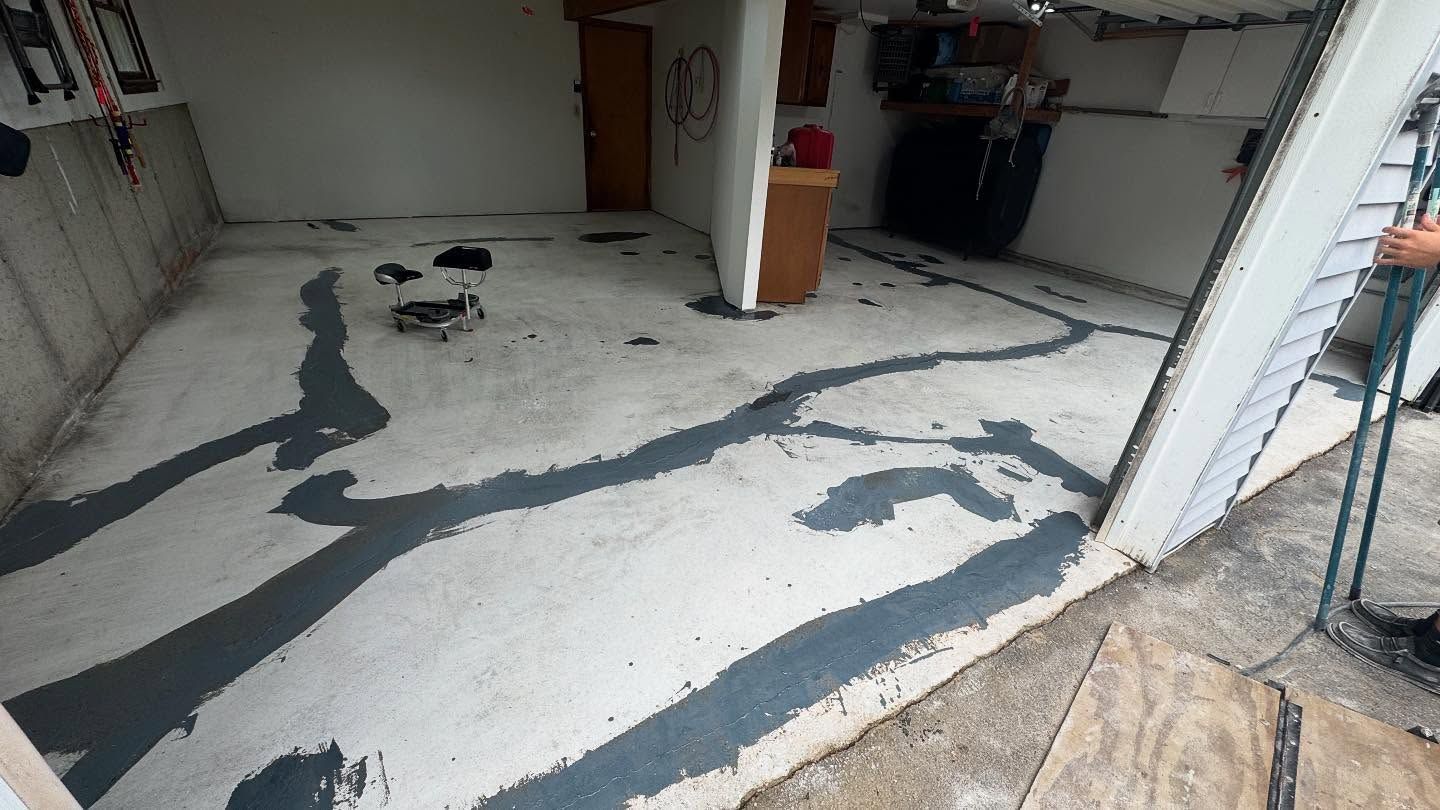
What Crack Repairs Actually Accomplish

Preparation involves routing the crack with a diamond blade or grinder to create a clean, uniform channel that the repair material can fill completely, removing any dust or debris that would prevent bonding. Epoxy or polyurea resins are then injected or poured into the routed crack, where they flow into the full depth and cure into a rigid bond that prevents the crack from opening further when the slab expands or contracts.
After the repair cures, the slab surface is ground flush so the repaired area is level with the surrounding concrete and won't create a ridge or bump under coatings. The repaired crack no longer allows moisture to seep through from below, which prevents efflorescence, staining, and the vapor pressure that can push coatings off the surface in basements and ground-level slabs common in Meredith properties.
Repairing cracks before applying epoxy or polishing ensures the decorative finish bonds uniformly across the slab and doesn't develop stress points where the coating flexes over an unrepaired crack and eventually debonds or cracks itself. Not all cracks indicate structural problems—many result from normal concrete shrinkage during curing or minor settlement—but all cracks need to be stabilized and sealed before finishing work proceeds to prevent long-term failure.
What Property Owners Ask About Crack Repairs
Concrete crack questions typically focus on whether the crack will return, what causes different types of cracking, and whether repair is necessary before applying decorative finishes or protective coatings to the slab.
What causes concrete to crack in the first place?
Concrete cracks due to shrinkage during curing, thermal expansion and contraction, settlement of the subbase, or structural overloading—identifying the cause determines whether additional measures like control joints or reinforcement are needed beyond the repair itself.
Why can't cracks just be filled with surface patching compound?
Surface fillers don't bond the crack structurally or penetrate to the full depth, so they break loose when the slab moves, leaving the crack open again and allowing moisture infiltration that undermines coatings and finishes applied over the patch.
How do you prevent the crack from reopening?
Epoxy injection locks the crack closed by bonding the two faces together with a rigid resin stronger than the concrete, but if the underlying cause—such as ongoing settlement or inadequate subbase support—isn't addressed, new cracks may develop elsewhere in the slab.
What happens if cracks aren't repaired before coating?
Coatings applied over unrepaired cracks will eventually crack in the same location as the substrate moves, and moisture seeping up through the crack can cause delamination and coating failure in the surrounding area, particularly in Meredith basements where vapor pressure is common.
How long before the repaired area can be coated?
Epoxy and polyurea crack fillers cure within hours to a day depending on temperature and product formulation, but surface grinding to level the repair must be completed and the area cleaned before any coating or finish is applied to ensure proper adhesion.
Winni Epoxy LLC provides thorough crack inspections and repair estimates for residential and commercial clients throughout Meredith and surrounding New Hampshire areas. Set up an evaluation to review your slab condition and prepare the surface for long-lasting flooring results.