
Color That Becomes Part of the Slab
Stained Concrete in Meredith for property owners upgrading patios, basements, garages, or commercial interiors with decorative finishes
Concrete staining penetrates the surface with reactive dyes or acid-based solutions that chemically bond with the minerals in the concrete, creating permanent color that won't peel or wear away like paint or surface coatings. The stain becomes part of the slab itself, producing rich, variegated tones that highlight the natural texture and aggregate structure rather than covering it uniformly. Winni Epoxy LLC applies stained concrete finishes across Meredith properties where homeowners and business owners want decorative upgrades without replacing the existing substrate, using color options that range from earthy browns and terracottas to cooler grays and blues depending on the mineral content of the concrete and the stain chemistry selected.
The process begins with thorough surface cleaning and preparation to remove any sealers, oils, or contaminants that would block stain penetration, followed by application of the stain itself, which reacts with the concrete over several hours to develop the final color. Because the color develops through a chemical reaction rather than being applied as a pigmented coating, the result is translucent and mottled, with natural variation that gives each installation a unique appearance.
Request a personalized design consultation to review color samples and discuss how staining integrates with your space and existing materials.
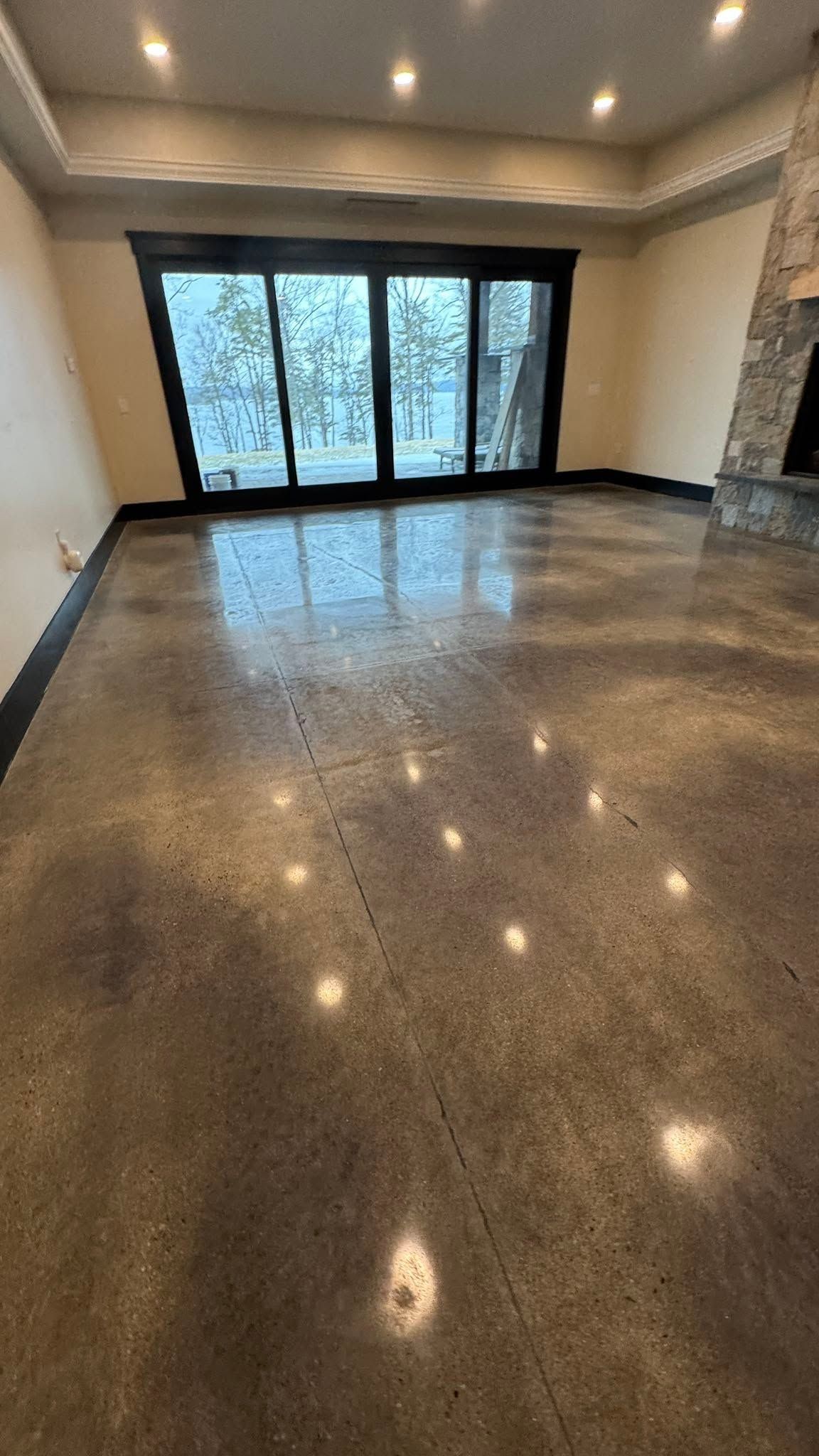
What You Notice Once Staining Is Finished

Stain application is controlled to achieve the desired depth of color, with additional coats intensifying the tone and application techniques like spraying or brushing creating different visual effects—uniform coverage produces a more consistent look, while varied application creates patterns and highlights that emphasize the concrete's natural character. Once the stain has fully reacted and been neutralized, a sealer is applied to protect the color and the concrete surface from moisture, staining, and abrasion.
The finished floor has depth and translucency that solid coatings lack, with light interacting with the stained surface differently than it would with an opaque layer, giving the concrete a richer, more dimensional appearance. Because the color is in the concrete rather than on top of it, wear from foot traffic or furniture doesn't expose a different color underneath—the stain remains visible even as the surface ages, though the sealer will need periodic reapplication to maintain protection and sheen.
Stained concrete works for both interior and exterior applications, though exterior installations require UV-stable sealers to prevent fading from sun exposure and weather-resistant topcoats to handle freeze-thaw cycles and precipitation. The decorative finish is suitable for patios, walkways, retail floors, restaurant interiors, and residential basements where the goal is to enhance the concrete's appearance without installing tile, wood, or carpet.
Answers About Stained Concrete
Questions about staining often focus on color consistency, durability, and how the finish holds up in different environments, especially in properties where the concrete serves both functional and aesthetic purposes.
Why does stained concrete look different from sample to sample?
Concrete composition varies—aggregate type, cement ratio, and curing conditions all affect how the stain reacts, so the final color will always have natural variation that can't be perfectly replicated across different pours or properties.
How long does the color last?
The stain is permanent because it's a chemical reaction with the concrete minerals, but the sealer that protects the surface will wear down over time and need reapplication to maintain moisture resistance and appearance, particularly in high-traffic areas.
What preparation does the concrete need?
Any existing sealers or coatings must be stripped away through grinding or chemical stripping because stain cannot penetrate through a barrier layer, and oil stains or contaminants will block the chemical reaction and create uneven color.
How does stained concrete perform outdoors in Meredith?
Acid stains hold up well in exterior conditions if properly sealed with UV-resistant and weather-resistant topcoats that protect against both sun exposure and the moisture cycling common in New Hampshire's seasonal climate.
What's the difference between acid stains and water-based stains?
Acid stains react chemically with the concrete to produce earthy, variegated tones, while water-based stains are more like dyes that penetrate the surface and offer a wider color palette with more uniform coverage and less unpredictability in the final result.
Winni Epoxy LLC provides stained concrete consultations that include color selection, surface assessment, and finish recommendations based on your property's conditions and intended use. Reach out to schedule a design consultation and review your options for a customized decorative concrete upgrade.